

Jul 16,2026
By:Amptfe
In modern high-frequency industrial, communication and electronic critical networks, signal attenuation, phase distortion and power loss have become core bottlenecks restricting system stability and transmission efficiency. The dissipation factor (DF, also known as loss tangent) of dielectric materials directly determines the energy loss during high-frequency signal transmission, which makes low-loss polytetrafluoroethylene (PTFE) composite materials irreplaceable core base materials for high-performance circuit networks, radio frequency transmission modules and precision signal processing equipment. Conventional polymer dielectrics such as PVC, PE and epoxy resin show obvious dielectric loss surges under GHz-level high-frequency electromagnetic fields, while customized low loss PTFE compounds maintain ultra-low dissipation factor across ultra-wide frequency bands, effectively solving the energy consumption and signal distortion pain points of critical network operation. As a professional manufacturer specializing in fluoroplastic deep processing, our factory independently develops and produces a full series of low-loss fluorine plastic raw materials and finished products, including PTFE SHEET, modified PTFE rods and extrusion tubes, which have been widely applied in aerospace signal networks, semiconductor test equipment, industrial wireless communication base stations and petrochemical precision monitoring circuits, with stable performance verified by ISO9001 and SGS third-party testing standards.
Pure PTFE resin itself has natural low dielectric loss characteristics thanks to its unique molecular structure: the carbon-fluorine covalent bond has extremely high bond energy, the molecular chain presents a fully symmetrical helical conformation, and there is almost no polar group inside the molecule, which avoids dipole polarization loss under alternating electromagnetic fields. The inherent dissipation factor of virgin PTFE raw material is controlled below 0.0001 at 1–10 GHz frequency band, far superior to most engineering plastics. However, pure PTFE has defects such as low hardness, poor creep resistance and weak wear resistance, which cannot meet the mechanical load requirements of long-term running critical networks. Therefore, low loss PTFE compounds are modified by adding low-loss inorganic fillers (fused silica, boron nitride, ultra-fine alumina) without introducing polar impurities, and the filling formula is precisely optimized to avoid destroying the symmetrical molecular structure of PTFE matrix. Unlike ordinary filled PTFE that uses carbon powder, graphite and other conductive modifiers which sharply increase DF value, our customized low-loss compound formula strictly screens high-purity non-polar fillers, controls filler particle size within micrometer scale, and adopts high-temperature kneading homogenization process to eliminate filler agglomeration. This modified process not only retains the ultra-low loss tangent of PTFE matrix, but also greatly improves dimensional stability, compressive creep resistance and thermal conductivity of the material, so that the composite can adapt to high-temperature, high-load and long-time continuous working conditions of critical transmission networks.
The control of dissipation factor in low loss PTFE compounds also relies on strict production process control. Impurity ions such as metal residues, moisture and organic volatile matter mixed in raw materials will generate interface polarization loss under high-frequency alternating current, leading to DF value fluctuation and signal loss mutation in network operation. Our production line adopts closed dust-free batching workshop, high-purity PTFE fine powder imported from top fluorine chemical suppliers, and vacuum high-temperature sintering process to completely remove residual moisture and low-molecular impurities in the blank. For extruded tubular products used in high-frequency signal wiring, PTFE TUBE produced by low-loss compound formula undergoes secondary high-temperature annealing treatment to eliminate internal residual stress of the material, reduce micro-defects inside the tube wall, and further stabilize the dielectric constant and loss tangent index within the full working temperature range of -200℃ to 260℃. In contrast, ordinary unmodified PTFE products produced by simple molding have large internal stress and uneven material density, their dissipation factor will increase by more than 30% when the ambient temperature exceeds 100℃, which will cause serious signal attenuation for high-precision critical networks such as radar front-end circuits and millimeter wave communication modules.
The application boundary of critical networks covers multiple high-end industrial fields listed in our product application system, including aerospace, semiconductor chip testing, new energy photovoltaic power generation, marine communication, light rail transit and petrochemical automatic control circuits, and low loss PTFE compounds become the indispensable dielectric medium in each subdivision scenario. In aerospace satellite communication networks, the signal transmission lines between satellite transponders and ground receiving stations work in ultra-high frequency Ku-band and Ka-band, the signal transmission distance spans thousands of kilometers, and any tiny dielectric loss will lead to sharp drop of signal-to-noise ratio. Low loss PTFE compound processed into thin skived PTFE sheet and micro-diameter extrusion tubes is used as insulating layer of coaxial radio frequency cables, which can keep DF value stable below 0.0002 under vacuum and alternating high temperature environment, ensuring stable transmission of satellite positioning and remote sensing data without distortion. Many aerospace equipment manufacturers choose our customized low-loss PTFE molded sheets and special-shaped machined parts to manufacture cavity supports of microwave filters, because the material’s ultra-low loss characteristic effectively suppresses standing wave loss inside the filter cavity and improves the signal filtering accuracy of the whole satellite communication network.
In semiconductor chip testing critical networks, probe stations, high-frequency test fixtures and signal transmission backplanes need dielectric materials that can maintain stable dielectric performance under ultra-high frequency millimeter wave signals and ultra-clean dust-free environment. Ordinary FR4 circuit boards and plastic insulation parts have obvious loss tangent rise above 20GHz, which will interfere with the accurate measurement of chip radio frequency parameters. Low loss PTFE compound blanks processed into precision PTFE articles such as insulating sleeves, positioning gaskets and thin isolation sheets are widely used in semiconductor test equipment. The material’s non-polluting, non-outgassing characteristics meet the wafer production clean room standards, while the stable low dissipation factor eliminates test signal drift caused by dielectric loss, greatly improving the test accuracy of high-frequency RF chips. In new energy photovoltaic power station monitoring networks, a large number of high-frequency signal acquisition circuits are arranged on the surface of photovoltaic panels, which work outdoors with large temperature difference between day and night. Low loss PTFE compound gaskets and insulating tubes are used for circuit isolation and sealing protection, the material’s wide temperature resistance and stable DF value avoid signal loss fluctuation caused by seasonal temperature changes, ensuring the real-time accurate transmission of photovoltaic power generation data to the central control network.
Marine operation and offshore oil platform automatic control networks face harsh working conditions such as high humidity, salt fog corrosion and alternating high and low temperature. Traditional rubber and plastic insulating materials will age rapidly in marine environment, and their dielectric loss will rise sharply after water absorption, leading to frequent signal failure of underwater monitoring equipment. Low loss PTFE compound has excellent hydrophobic and anti-corrosion performance, its molecular structure does not absorb water vapor and salt ions, and the dissipation factor remains unchanged after long-term immersion in seawater. Our customized low-loss PTFE tubes and flange gaskets are matched with underwater signal transmission cables of marine monitoring networks, solving the long-term stable operation problem of offshore critical communication circuits. Light rail transit vehicle-mounted control networks and petrochemical explosion-proof monitoring circuits also put forward strict requirements on dielectric loss and flame retardancy of insulating materials. Low loss PTFE compounds can be added with inorganic flame retardant fillers without increasing DF value, and processed into various special-shaped insulation parts to isolate high-frequency control signals, avoiding signal interference and power loss caused by high-frequency crosstalk in vehicle-mounted and explosion-proof electrical networks.
Compared with other high-frequency dielectric materials such as FEP, PFA, LCP and ceramic substrates, low loss PTFE compounds developed by our company have comprehensive advantages in dissipation factor control, temperature adaptability and processing flexibility. FEP and PFA fluoroplastics have higher loss tangent than modified low-loss PTFE at frequencies above 10GHz, their DF value is about twice that of low loss PTFE compounds, which is not suitable for ultra-high frequency critical networks with strict loss control requirements. Liquid crystal polymer (LCP) has low loss at room temperature, but its dielectric loss rises exponentially when the temperature exceeds 120℃, and the material’s thermal expansion coefficient is large, which is easy to deform and fail in high-temperature working networks. Ceramic substrates have ultra-low loss tangent, but they are brittle, difficult to process into complex special-shaped parts, and the processing cost is extremely high, unable to adapt to mass production demand of large-scale critical network equipment.
Our low loss PTFE compound series materials support diversified processing methods: skiving into ultra-thin continuous PTFE sheet, compression molding into solid molded sheets, extrusion into seamless PTFE tubes, turning into various special-shaped PTFE articles, and punching into flat and expanded PTFE gaskets, which can meet the customized processing needs of all structural parts in critical networks. All low-loss compound products pass SGS fluoroplastic dielectric performance testing, the dissipation factor test report covers 1GHz to 110GHz full frequency band, and the index fluctuation range is controlled within ±0.00005, providing stable material performance guarantee for high-precision network system design. In addition, we provide professional material formula customization service according to customers’ network frequency band, working temperature, mechanical strength and loss index requirements, adjust filler type and proportion of PTFE compounds to balance low loss performance, mechanical property and production cost, and provide one-stop solution from raw material blank to finished precision machined parts for critical network equipment manufacturers.
With the rapid iteration of 6G communication, terahertz detection, high-precision aerospace radar and industrial Internet of Things critical networks, the working frequency of signal transmission systems continues to expand to terahertz band, and the requirement for material dissipation factor is further reduced to below 0.00005. Our R&D team with 24 independent patents is continuously developing new ultra-low loss PTFE compound systems, adopting nano-scale spherical fused silica fillers and high-purity boron nitride composite modification technology to further reduce molecular interface polarization loss inside the material. At the same time, we are developing reinforced low-loss PTFE composite materials with glass fiber and quartz fiber, solving the problem of poor tensile strength of pure low-loss PTFE compounds, so that the materials can be applied to flexible high-frequency transmission lines of portable critical network equipment.
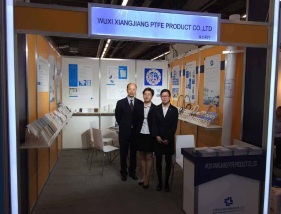
Energy conservation and low carbon has become an important development direction of industrial critical networks, and reducing dielectric loss of transmission medium is the core way to cut down the overall energy consumption of network equipment. Low loss PTFE compounds will replace a large number of traditional high-loss dielectric materials in the upgrading of global communication, aerospace and industrial control networks. Our company has participated in international exhibitions such as ACHEMA 2024 and CSEAC 2023 to display low-loss PTFE sheet, tube and customized special-shaped parts, and established long-term cooperative relations with more than 60 countries and regions’ high-frequency equipment manufacturers. Relying on 18 years of filter and fluoroplastic manufacturing experience, 30+ skilled R&D and production teams, we will continue to optimize low loss PTFE compound formula and production technology, provide more stable, low-cost and high-performance fluoroplastic dielectric materials for global critical network construction, and help customers realize low-loss, high-efficiency and long-life operation of high-frequency signal transmission systems.

Hi! Welcome back.
How are you doing?
We always adheres to the professional, attentive, focused environmental protection filtration, and is a worthy partner in the filtration industry.
Amptfe is a world-class PTFE pipe, rod, and material solution manufacturer certified by ISO 9001:2015.
Tel: +86 1-815-110-6156
E-mail:ptfe@amptfe.com
Add:Room 4010-1, Building B, No.68 North Dongting Road, Dongbeitang Sub-district, Xishan District,Wuxi,Jiangsu
Copyright © 2024 Ltd All Rights Reserved.